Forum Moderators: buckworks & skibum

Message Too Old, No Replies

Google Reports on AdWords Bad Advertising Practices 2014


engine

5:46 pm on Feb 3, 2015 (gmt 0)

WebmasterWorld Administrator 10+ Year Member Top Contributors Of The Month


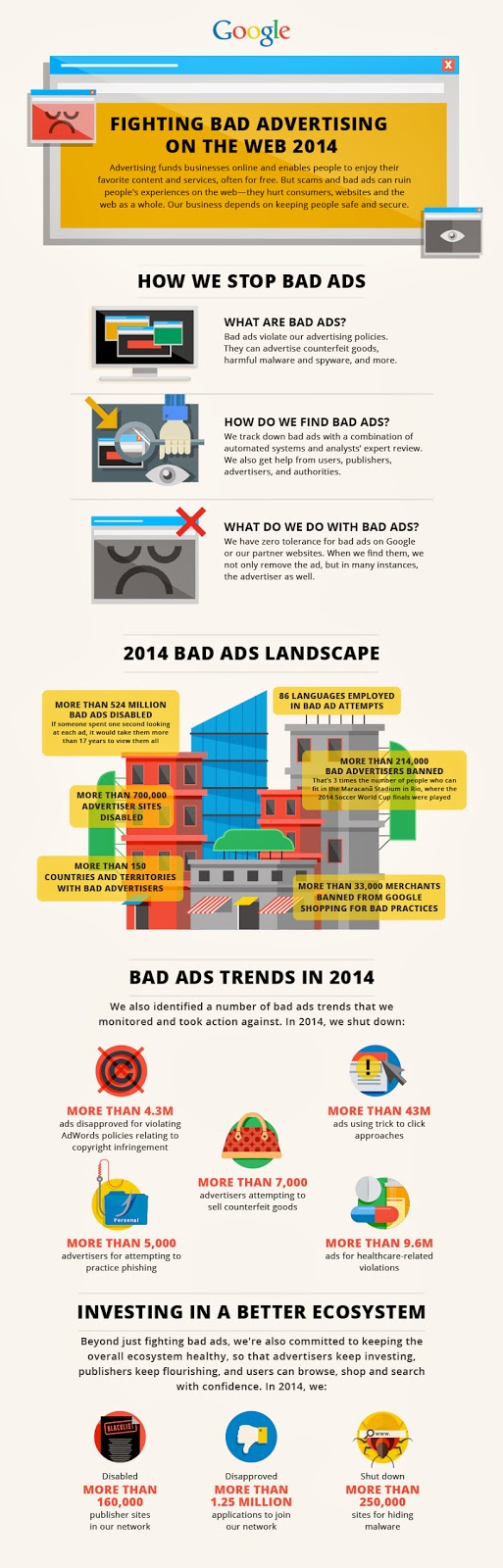
Google just published information and infographic which shows some highlights of its battle against malpractice and bad actors in advertising, 2014.

"We have a team of analysts who work around the clock to protect users, and continue to hone our detection technology to identify bad ads and stop bad actors as it’s a vital part of keeping our ads ecosystem clean."

Original source Fighting Bad Advertising Practices on the Web — 2014 Year in Review
Here’s a look into some of the trends we fought against last year:

  • Combating counterfeiters: Our relentless crackdown on counterfeit goods is producing powerful results. We banned 7,000 advertisers for promoting counterfeit goods, down from 14,000 in 2013 (and 82,000 in 2012), demonstrating that counterfeiters are increasingly unable to circumvent our advanced enforcement systems.
  • Protecting against malicious software: To protect the safety and security of our users, we stop all ads pointing to sites where we find malware - whether it’s spyware, adware or other types of malicious software. Last year we removed 250,000 sites from our network for hiding forms of malware.
  • Weighing in against weight loss scams: While many advertisers selling dietary supplements provide accurate information, some bad actors use outrageous claims to entice consumers. In 2014 TrustInAds.org, a group which includes Google, AOL, Yahoo and others, released a report showing that we had collectively removed or rejected more than 2.5 million ads related to weight loss and dietary supplements over the past 18 months.


  • Google Reports on AdWords Bad Advertising Practices 2014

    aristotle

    7:04 pm on Feb 3, 2015 (gmt 0)

    WebmasterWorld Senior Member 10+ Year Member Top Contributors Of The Month


    Last year we removed 250,000 sites from our network for hiding forms of malware.

    Did Google remove those sites from the organic search results, or just from adwords ?

    eWhisper

    10:21 pm on Feb 3, 2015 (gmt 0)

    WebmasterWorld Senior Member 10+ Year Member


    I find some of these numbers amusing. Some are legit; but just because a new advertiser doesn't know they can say "Click here to learn more" or they can't use two ! in an ad - G automatically disables it and their 'bad ads' credit goes up.

    I applaud them for removing a lot of malware and other really bad ads; but it would be much more informative to see this broken down into minor policy violations vs the actual number of bad actors involved.

    rish3

    8:11 pm on Feb 4, 2015 (gmt 0)

    10+ Year Member Top Contributors Of The Month


    This is an attempt to do a little PR after the last major malware event was able to evade the Google anti-malware team for 3+ weeks :)

    There's more info over at Securi: [blog.sucuri.net...]

    EditorialGuy

    9:04 pm on Feb 4, 2015 (gmt 0)

    WebmasterWorld Senior Member 10+ Year Member Top Contributors Of The Month


    This is an attempt to do a little PR after the last major malware event was able to evade the Google anti-malware team for 3+ weeks :)


    It may be PR, but it isn't a reaction to a specific event. It's a yearly report that Google has published for the last several years (possibly longer).

    I'm not even sure that it's good PR, because the depressing numbers are enough to make the average person leery of Internet advertising.

    aristotle

    12:02 am on Feb 5, 2015 (gmt 0)

    WebmasterWorld Senior Member 10+ Year Member Top Contributors Of The Month


    Well the report has to focus on their successes, because they don't have any reliable information about how many malware distribution cases they've failed to discover.

    rish3

    12:37 am on Feb 5, 2015 (gmt 0)

    10+ Year Member Top Contributors Of The Month


    It may be PR, but it isn't a reaction to a specific event. It's a yearly report...

    A report which they have, in the past, released as early as January, and as late as March. Which gives them lots of leeway to use it as an on-demand PR diversion.

    Nutterum

    9:26 am on Feb 5, 2015 (gmt 0)

    10+ Year Member Top Contributors Of The Month


    This report is for the every day Joe and do-it-yourself small business ventures. Every marketer worth their salt knows that this means nothing in the grand scheme of things.

    engine

    9:56 am on Feb 5, 2015 (gmt 0)

    WebmasterWorld Administrator 10+ Year Member Top Contributors Of The Month


    Google Shuts Off More AdWords Malware Affecting AdSense [webmasterworld.com]

    It's sad that there are so many attacks, according to the published figures, and, of course, we, and they, don't know about the ones they didn't catch.

    skibum

    10:07 pm on Feb 9, 2015 (gmt 0)

    WebmasterWorld Senior Member 10+ Year Member


    I hope they are better able to tell the difference between counterfeit sites and real brand sites than they were a few years ago.

    They banned an account for having an ad to the official UGG Australia site that had been paused for seven YEARS claiming that it was promoting counterfeit goods.

    It seems telling the difference between sites that educate people about counterfeit products and those that sell them is (or was) not something Google excels in.

    That probably cost me $50,000 or more because of ads to other perfectly legit sites that went down with that account. They lost a big chunk of change too.